
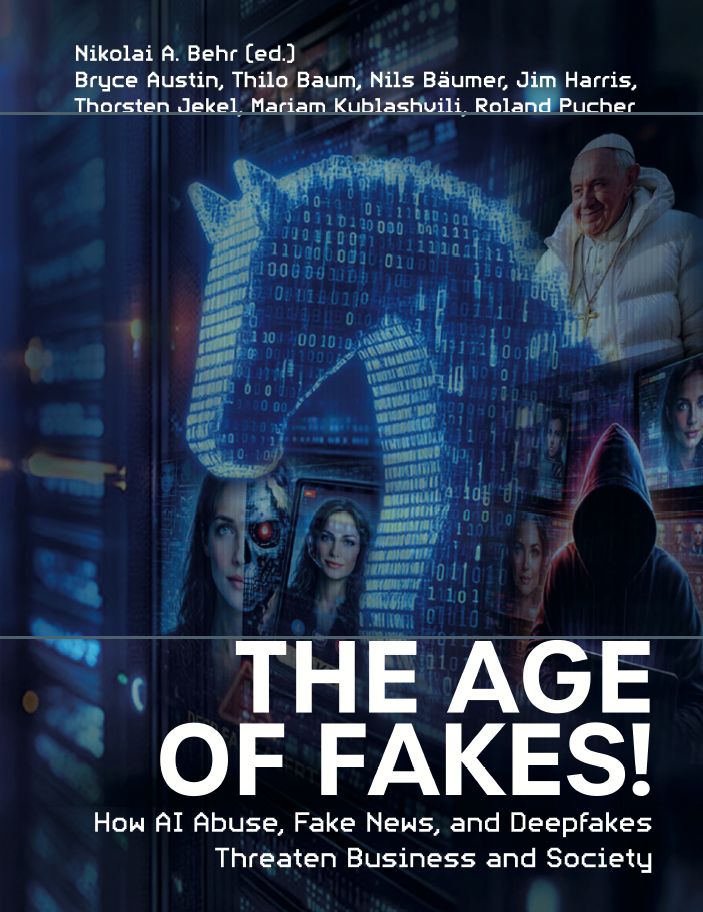
Cybercrimeis costing companies, governments, and citizens trillions of dollars a year globally. Bad actors are increasingly using deep fakes as a means to defraud corporations, institutions, governments and average citizens.
I was on a TV show talking about artificial intelligence (AI) recently. The host, who is in the public eye, shared anexperience. There are hours of video of her on the TV station’s site and YouTube. Scammers had trained an AI on her voice. Her family received a phone call that sounded EXACTLY like her that went something like this:
“I’ve had a car accident and rolled the SUV. I got out okay, but the car burned, and my wallet was inside. I’m in the hospital and am starving and the food is terrible. Can you please send $200 right away to nursebetty@gmail.com so that I can get something in the cafeteria?”
Her family has a safe word. If a family member doesn’t use it in this kind of emergency phone call, everyone knows that it’s not them. For this example, I’ll make one up: “jalapeno peppers.” If it’d really been her, she might have said, “I’m in the hospital and am starving and want to have a pizza with “jalapeno peppers.” Her family then would have known that it was really her.
So, the question is: Have you done safe word training with your family? Grandparents are particularly vulnerable to this kind of fraud.
In February 2024, an accounts payable clerk in the Hong Kong office of Arup, a multinational firm, received an email asking her to join a finance video call from her firm’s UK‑based CFO. She joined the call with the CFO and several other colleagues in finance. The CFO said something like “We have a VERY serious problem. We haven’t paid our most important supplier in 90 days. And if it goes one more day, we might lose them. That would be catastrophic. I want you to immediately transfer $200 million to these subsidiaries of them in different countries.”
So, the clerk made the transfers totaling about HK$200 million (US$25.6 million). After contacting the company’s headquarters, she learned that the CFO had never authorised the payments. The fraudsters used AI‑generated “deep‑fake” videos and cloned voices – for not just the CFO but all the other finance department people on the call.
“It was the best of times, it was the worst of times,” is the opening sentence from A Tale of Two Cities by Charles Dickens.
We are living in both the best of times and the worst of times today: Never before has humanity had such powerful tools at our fingertips. But at the same time, it has given these powerful tools to bad actors. And the bad actors are the fastest to adopt new tools which they are using to create deep fake audio and video.
Media Coverage of Deep Fakes is Negative. I would like to provide some positive examples of the incredible benefits of Deep Fakes. First with headshots, then a museum in Florida’s application and finally a fascinating story about the father of modern psychology.
Every seven years or so I get new headshots. It costs me $300 for a photo shoot in a photographer’s studio, but that’s just the tip of the iceberg in terms of cost.
The photographer will have extra charges based on time, number of changes of clothing, the number of backgrounds that I want and the number of final photos I choose.
Mid range off the rack men’s suits cost $400 to $1,000 while a Hugo Boss suit will cost up to $1,400, so buying three new suits for the photo shoot can add thousands of dollars to additional cost for new threads.
But the real cost it time away from the office. I work with the largest CEO peer mentoring group in Canada. A CEO running a $100 million a year business is responsible for $50,000 of revenue every hour. So, four hours for a photo shoot (including travel, buying new suits, setting up) has an opportunity cost of $200,000.
Three AI headshot sites – Aragon.ai, InstaHeashots.com, and HeadshotPro.com – all received more than 200,000 US visits over October 1 to November 30, 2025 representing more than 90% of the market share according to Semrush. (Semrush is a digital marketing platform for SEO, PPC, content, social, and competitive research providing report insights globally). Aragon has created 39 million headshots, Estonia based BetterPic.io has created 33 million, InstaHeadshots 20 million and HeatshotPro 18 million.
For all four services you upload between five and 15 clear photos of yourself, then you choose attire, backgrounds and poses. And on a more granular level you can determine your expressions and angles. Standard, basic and executive packages give you different flexibility and number of headshots ranging in price from $29 to $75.
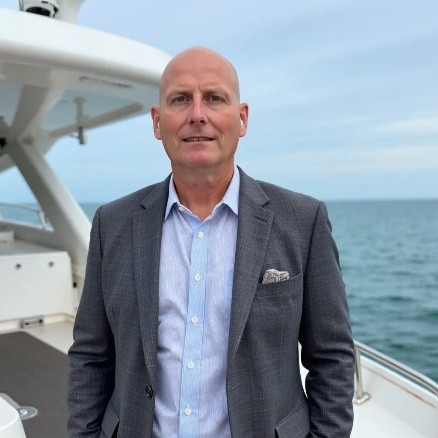
I speak at conferences and seminars all around the world. Imagine that I was being hired by Sea Ray to keynote at the 2024 Sea Ray 65th Anniversary Dealer Meeting in Knoxville Tennessee. The company’s Sundancer 320 is the most popular new 30-40 footer sold in the US. If I really wanted to customize my keynote, I’d rent a Sundancer 320 for a few hours and get a few headshots on the boat - or I could just use one of the above headshot services. Same goes for video. Using Sora or Google’s VEO3, I could create an image of me on a Sundancer 320 on the water. This a photo of my colleague Aidan Crawford, who did exactly this.
“Studio quality headshots, minus the studio costs,” is the market line from InstaHeadshots.com – and it rings true. But it’s not just the cost, it’s the convenience, the speed and flexibility. I can create hyper realistic, professional customized headshots in minutes from the convenience of my office desk.
Summary
In summary, it’s not just the money. It’s about the hyper customization, the incredible amount of time you can save, the convenience and the flexibility.
You can talk to the Spanish surreal artists Salvadore Dalí at the Dalí Museum in St Petersburg, Florida. The museum has brought the famed artist back to life using AI.

The experience began with an 8-foot-high iPad in the lobby in 2019. You could go up to a 3D image of Dalí and take a selfie with him. The museum upgraded the experience in 2024 by uploading all the video and audio of Dalí and his writing and diaries into OpenAI’s ChatGPT4 and then synthesized his voice with ElevenLabs. The result was that you could ask Dalí anything. Such as: “Why did you paint melting clocks?”
To which Dalí would answer “to symbolize the fluid, unreliable nature of time, inspired by a dream about Camembert cheese melting in the sun, representing how time softens and loses meaning in dreams and memory.” The response is in Dalí’s unique, Spanish accent. It’s like actually talking to Dalí if he was still alive. If the answer to your question is not directly within the data set, the AI will synthesize the answer of what Dalí would likely have said.
When I was a kid and our family went to a museum or art gallery, we’d rent headsets that came with earphones and as you walked about the gallery you’d enter the number of the painting or sculpture that you were standing in front of and a narrator would tell you the history of the piece.
How much more engaging is it for children learning to talk to the artist directly? In a later section I’ll discuss how customized AI tutoring will improve learning outcomes by up to 100-fold by 2030.
Teachers today complain that they have to compete against TikTok and Disney for the attention of students. AI and this deep fake example create a level playing field. The Dalí AI is deeply engaging. Teachers and the education system need to embrace this technology.
I called the Dalí museum in researching this piece a few months ago and asked them to imagine a smartphone app that museum goers could download. 5G is hyper accurate in terms of positioning so the application would know which painting, sculpture or object art you were standing in front of. What a fabulous example that would be!
Play and fun are essential for children. That is how they learn. It’s the same for adults. Play re-opens neuroplasticity. Adults learn best when they feel safe, curious and engaged.
More than 60% of the people in the US, Canada, the UK and Australia fear AI, according to a global survey of more than 23,000 people by Ipsos. When in a state of fear adults aren’t open to learning. Given that many of the media messages about AI and deep fakes create fear, experiences like those offered in the Dali Museum can counter this by engaging people and opening minds.
His AI Digital Twin is designed to help millions of Chinese with anxiety and depression
Martin Seligman is the founder of positive psychology, the study of human strengths and well-being. Seligman studied positive emotions, character strengths, and what makes life fulfilling. His work was aimed at enhancing well-being. His books, including Authentic Happiness and Flourish, popularized concepts like optimism, resilience, and has greatly influenced therapy, education, workplace well-being programs, and public policy by promoting evidence-based practices that help individuals and communities thrive.
One of Seligman’s graduate students, Dr. Yukun Zhao, along with a team of researchers in Beijing and Wuhan created an AI Chatbot called Ask Martin without Seligman’s permission or awareness. In 2023, Zhao’s team trained an AI on Seligman’s writing creating a talking chatbot whose answers drew deeply from Seligman’s ideas, allowing anyone to access them. Zhao messaged Martin that he’d created a virtual Seligman.
Seligman eventually decided to embrace the digital twin rather than challenge its existence. But if he’d wanted to shut it down, he’d likely have been unsuccessful. Seligman is American but Ask Martin is in China, where US laws have little traction.
In the US Senate Judiciary Committee, a bipartisan group of senators are circulating a draft bill titled the NO FAKES Act that, if passed, would force the makers of AI-generated digital twins to license their use from the original thought leader. The bill would allow individuals to authorize, and profit from, the use of their AI-generated likeness — and bring lawsuits against cases of unauthorized use. But even if NO FAKES Act passes, it will be largely powerless against the global tide of AI technology.
Ask Martin wasn’t built with a profit motive. Zhao built it to help millions of fellow Chinese citizens through an epidemic of anxiety and depression.
Seligman’s is something of a hero in the world of Chinese psychology. His theories on well-being are embedded in Chinese education policies from kindergarten on. Zhao believes Seligman’s popularity will help Ask Martin as a mental health AI “coach” stand out in the Chinese market.
Seligman is in his eighties. Ask Martin will extend his legacy long after he is dead.
This case study raises some interesting questions. For instance, if you ask Martin a question does the digital twin provide the answer from the 25-year-old Seligman as a PhD student at the University of Pennsylvania or the 83-year-old Seligman in 2025? Or should the digital twin provide a series of answers showing the evolution of Seligman’s thinking over his 60-year career?
An author can create an audio book for 100 Times Lower cost than in 1990
My first book came out in 1990. It was called The 100 Best Companies to Work for in Canada and it was a national bestseller. As a young journalist and one of the three coauthors, I was very proud of it.
At the time if I had wanted to turn it into an Audio book, it would have cost more than $10,000 – for the narrator, the studio, editing and mastering. For a high-end audio book production, the cost could have trended as high as $50,000 at the time. Add to that hiring a Hollywood A lister to read it and who knows how high the cost could have been.
A colleague of mine in 2025 produced an audio of his 80,000-word book using AI tools for less than $100. Think about how hugely deflationary this new technology is. From $10,000 to $100 – that’s a 100-fold cost reduction. This makes an authors work incredibly accessible.
I can stand in front of a green screen and record my likeness in 4K for just five minutes then feed it into AI systems which will learn my voice, visage and hand gestures. Then I can feed it one of my 100,000-word books and create hours of training and development video, at 100 times less than it would have cost me in 1990. Will this change learning and education?
With these examples above, I would like to argue that AI is just a tool. How that tool is used will determine whether we think it’s good or bad. Most people in the world will use AI for good. For thought leaders, authors, speakers and it offers incredible opportunities. For teachers and trainers, it offers unprecedented reach for their ideas.
But for defending against the bad actors who will use deep fakes for nefarious purposes – for fraud, ransomware, scam – we have to prepare ourselves. So, I will turn back to cybersecurity and how to defend ourselves against bad actors who use deep fakes.
You might wonder why I am discussing cyber security when this book focuses on deep fakes. When bad actors gain access to corporate email systems, they can gain insight into corporate relationships, partnerships and launch multiple deep fake attacks against our eco system of business partnership. So cyber security and defending against deep fakes goes hand in hand.
If the account payable clerk in Hong Kong had simply called the CFO in the UK, and verified the request, it would have defeated the scam. I don’t type credentials into a link I’ve been sent by email or text. Or discuss my tax account with someone who has called me claiming to be from the tax department. And I don’t call an organization back on the number provided in the email and text. I call back on the organization’s official number.
The other simple solution is to ensure every single employee is trained in cyber security hygiene. This includes strong password protection practices, using a password manager, enable multi-factor authentication (MFA); regular software updates and patching, using reputable antivirus, email and phishing awareness, data backup and recovery; store backups offline as well as in the cloud; testing recovery periodically; remove unused accounts and permissions and ensuring secure networks, using strong Wi-Fi passwords and modern encryption; and avoiding public Wi-Fi or using a trusted VPN.
Questions:
Do you have a safe word for your family? (Grandparents are particularly susceptible to this kind of scam)
What about every employee in your company?
Has everyone in your firm received cybercrime, phishing and ransomware training?
Here are some alarming statistics:
• Cybercrime is predicted to cost $US10.5 trillion globally in 2025[MC1.1], according to the '2025 Official Cybercrime Report' from Cybersecurity Ventures. If it were measured as a country, then cybercrime would be the world’s third largest economy after the US and China. That’s about US$29 billion per day or US$335,000 per second.
• By 2031 cyber crime is predicted to cost the world $1 trillion per month – up from one trillion per year in 2020, according to Cybersecurity Ventures.
• “Cybercrime costs include damage and destruction of data, stolen money, lost productivity, theft of intellectual property, theft of personal and financial data, embezzlement, fraud, post-attack disruption to the normal course of business, forensic investigation, restoration and deletion of hacked data and systems, reputational harm, legal costs, and potentially, regulatory fines, plus other factors” said Steve Morgan, founder of Cybersecurity Ventures.
• There are approximately 3.4 billion malicious phishing emails sent every day, according to research from GreatHorn.
• Microsoft’s Digital Defense Report says its customers alone see about 600 million cyberattacks per day from criminals and nation-states.
• Companies lose $309 million in market value on the day a cyber attack is reported. This peer reviewed study was published in 2025.
• Multiple studies, industry analysis and experts estimate that only 10% of cybercrime globally is ever reported to law enforcement or authorities. So official reports, estimates likely only capture one in 10 incidents at best. Why is this?
a) Organizations fear losing customer trust and investor confidence.
b) The reputational risk damage and negative media publicity can be significantly greater than the financial cost of data breaches or ransomware.
c) Collateral costs (downtime, rebuilding costs, legal, PR, customer churn) are two to three times greater than the cost of ransoms.
d) Victims assume police or regulators can’t or won’t do much: attackers are overseas, evidence is complex, and success rates are low.
e) The time, paperwork, and perceived hassles of reporting add huge cost.
• In 2024, the World Economic Forum’s Global Risk Report identified “Misinformation and disinformation” as the single biggest global risk through 2026, ahead of extreme weather and interstate conflict.
• A 2024 report by the European Repository of Cyber Incidents analyzing more than 2,506 attack incidents found that 11.9% of the attacks came from China, 11.6% from Russia, 5.3% from Iran; 4.7% from North Korea; 2.6% from the Ukraine; 2.3% from the US; 1.8% from Pakistan and 1.7% from Turkey. 13.4% were from other countries and 44.8% couldn’t be identified.
• Smishing is the using text messages (SMS, iMessage, WhatsApp, etc.) to trick people into giving up sensitive info (passwords, banking details, one-time codes) or making payments. Recent data suggests that up to 30% of global phishing is now delivered via SMS.
• Vishing is voice calls that goes something like this:
a. “This is your bank / the tax department there’s a problem with your account…”
b. “We’ve detected suspicious activity; read me the code we just texted you…”
c. “You must pay this fine / fee immediately over the phone…”
d. "This is FedEx / UPS calling for the brokerage fee to deliver your package..."
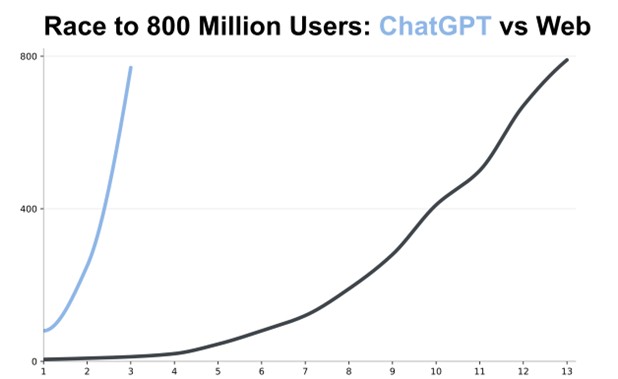
Bad actors are the fastest to adopt new technology. The rate of change we are experiencing is exponential. For instance, it took the web 13 years to be adopted by 800 million users. It’s taken ChatGPT less than three years. The rate of AI adoption is 4.3 times faster than the web’s adoption.
When ChatGPT publicly launched on November 30, 2022, it focused on text queries. In 2026 users can create images and video. For images we have DALL-EE (now embedded in ChatGPT) and Midjourney. For video we have Sora or Google’s VEO3. As a result, the age of being able to trust what you see is over.
Google reports that it blocks 99.9% of spam, phishing and malware from reaching its customers’ inboxes – billions of messages per day. I really appreciate this. Why then do I get dozens of spam texts and phone calls daily through my mobile network provider? I would think that if as a mobile provider I saw 10 million texts coming from a single IP address to my wireless network subscribers, I might think “Gee this might be a bad actor trying to defraud my customers.”
Why haven’t mobile providers taken a page out of the Google’s playbook? Mobile users are being defrauded billions of dollars a year globally because mobile companies have not focused on this.
The two examples at the start of this chapter are more commonplace than we think. Cyber crime is dramatically under reported for reasons cited above. When it’s individuals they are deeply embarrassed about falling victim to it. A friend of our family was defrauded of $40,000 by a crypto currency scam. She was so embarrassed that she never reported it to authorities.
I was working for two days with the CIOs and CTOs of Canada’s largest hyperscalers. One of the firms involved was Palo Alto Networks. The individual had a great analogy. When he began with the firm, he had the notion that he’d go into a bustling nerve center.
To fight cyber attacks, he imagined going into a room like the underground command center in the movie War Games starring Matthew Broderick as David Lightman (a teenage hacker). In the movie, the command center was 150 feet wide, 100 feet deep, with a ceiling soaring 50 feet overhead. The far wall is dominated by a gigantic bank of screens divided into several massive displays: glowing world maps, missile trajectories arcing across continents, digital countdown timers, status grids, and radar-style plots. In front of this, are rows of consoles step down toward the screens and workstations: CRT monitors, blinking indicator lights, on desks, a colossal functional machine built to manage nuclear war in real time.

But that vision was shattered when he walked into Palo Alto Networks headquarters and learned that 99.9% of real-time cyber attacks are dealt with by AI and the remainder are dealt with a small group of experts working on their laptops.
Microsoft’s Digital Defense Report says its customers alone see about 600 million cyberattacks per day from criminals and nation-states.
In 1993, Visa became the first card network to deploy neural-network-based fraud technology at network scale, in partnership with HNC. A neural network is a type of AI. The tech reduced credit card fraud by more than 70%, by looking at patterns.
Neural Networks
A neural network is a computer program that identifies patterns. The neural network can’t explain why a particular pattern occurs; it only identifies that the pattern exists. Visa has used neural nets to cut fraudulent credit card transactions by up to 90 percent in some jurisdictions.
A neural network is a program that “learns” by recognizing patterns. If a jewelry shop in Iowa requests authorization for a $5,500 purchase on a client’s card, the system looks at their historical pattern of spending and asks, “Has this client ever bought anything in Iowa?” No. “Has he ever purchased jewelry?” No. Has he ever charged any item for $5,500 to his card? No.
If the answer to all three questions is no, the neural net identifies that this requested transaction is outside of the client’s normal purchasing pattern, predicts that it’s a fraudulent transaction and requests that the store clerk get photo identification. If it’s a thief, he/she will run out of the store at this point. If it’s the actual client visiting his girlfriend’s family for the first time in Iowa and buying an engagement ring to propose, he’ll provide the identification and the transaction will go through.
After one seminar, a participant told me that his gas card had been stolen, but that he really didn’t worry about it too much. After all, how much gas can a thief steal? At the end of the day, he reported it stolen and discovered that the thief had run up thousands of dollars of charges, going from gas station to gas station buying cartons of cigarettes. Here’s a perfect case for a neural network to identify a pattern. Has this customer ever bought a pack of smokes? No. Well, then why today is he buying thousands of dollars of cartons today all at different gas stations? It’s fraud. The gas station credit card provider clearly was not as sophisticated as Visa and hadn’t implemented a neural network fraud detection system.
Neural nets can be used to identify overall patterns of behavior in groups of people. In analyzing stolen credit cards, neural nets came to recognize the pattern that thieves use. It takes human ingenuity to find meaning in the pattern, in other words, to understand why the pattern occurs.
A neural network can help companies better target market their products and services: Car buyers in a certain age group, income bracket and geographical area buy a new car every four years, on average. After individuals in this target group buy a new home and take out a mortgage, their behavior changes. Over time, a neural net would show that they will buy a new car every eight years as they shift priorities to pay off their mortgage. With this knowledge, a bank could save thousands of dollars in marketing costs by changing its direct marketing programs for cars loans from a four-year to an eight-year cycle for new homeowners.
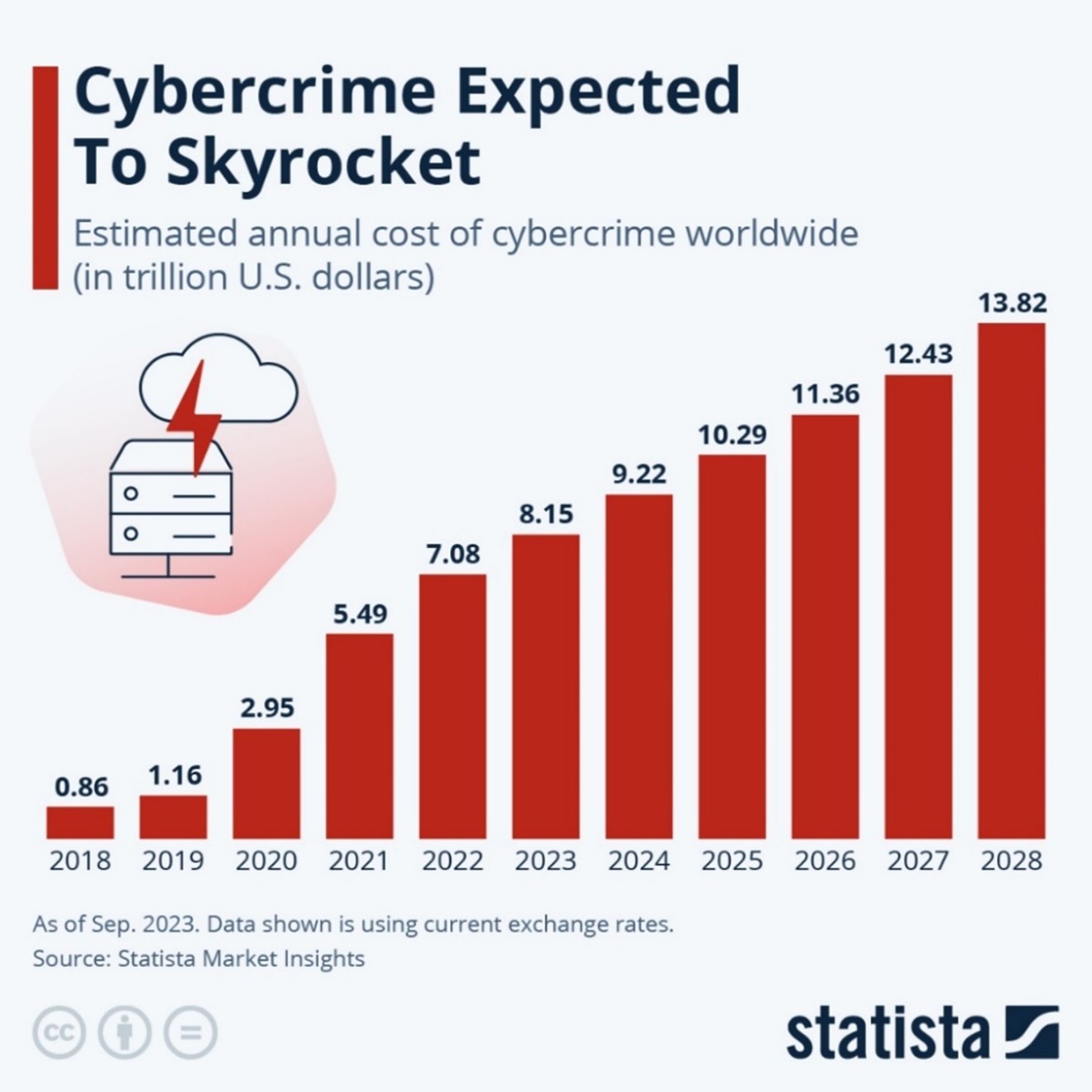
From 2018 to 2028, the annual estimated cost of cybercrime globally will increase 16-fold. Kelly Bradshaw, the former Chief Superintendent of the Royal Canadian Mounted Police (RCMP), notes that only 10% of fraud is reported. And it’s not just companies that are risk; individual Canadians are losing $500 million every year to cyber fraud.
I work with the largest CEO peer mentoring network in Canada a few years ago. One of the CEOs had hired a firm to train every employee on cyber security. The course highlighted the tricks fraudsters use in phishing and spear phishing schemes and what employees should watch out for. The course was very engaging and successful, receiving high ratings from employees.
Two weeks later, the training firm launched a fake phishing attack. Even after this highly effective training, a staggering 20% of employees keyed in their login details. For me, this highlights three key takeaways:
1) Every employee needs cybercrime, phishing and ransomware training
2) This training can’t be just a one-and-done, but should be an ongoing initiative
3) It only takes one employee to fall victim to this, and your corporate IT system can be compromised and shut down.
As a leader for your organization, you need to consider the consequences if your company can’t operate for three weeks.
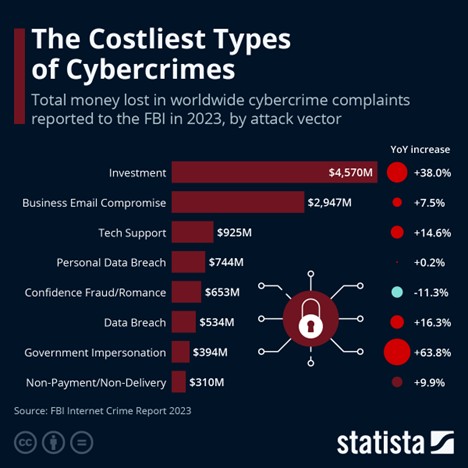
For my firm, we have purchased comprehensive cyber insurance tailored to our business and industry. The insurance company conducted vulnerability testing before offering us a policy and allowed us to mitigate deficiencies to achieve the lowest premiums possible. The insurance covers breaches, legal fees, and ransomware demand, plus the insurance company will help us if we ever do suffer security breaches.
This is a great discipline – to go through vulnerability testing. I recommend it to every organization, hand in hand with training.
Why is this Important Now?
The number and cost of cyber attacks are increasing, and they can have far reaching implications for both organizations and society.
In May 2021, the Colonial Pipeline—which carries nearly 45% of the East Coast’s fuel supply across the U.S. —was hit by a major ransomware attack that became one of the most publicized cybercrimes affecting critical infrastructure. Hackers linked to the DarkSide ransomware as a service group gained access to Colonial’s corporate network through a compromised VPN password lacking multi factor authentication. Once inside, they deployed ransomware that encrypted systems and stole around 100 GB of data, then demanded payment to restore access.
To contain the breach and prevent further spread, Colonial proactively shut down its pipeline operations, halting fuel flows across thousands of miles of pipeline. This shutdown triggered widespread fuel shortages, panic buying, and price spikes across several U.S. states, prompting a federal state of emergency.
Colonial paid $4.4 million in cryptocurrency to the attackers for a decryption tool, though recovery efforts still relied heavily on internal backups and security work. The pipeline resumed operations after several days, but the incident underscored vulnerabilities in critical infrastructure cybersecurity and led to policy and regulatory responses aimed at strengthening defenses.
Here’s another example:
One of the most significant ransomware attacks on a Canadian hospital in recent years hit The Hospital for Sick Children (SickKids) in Toronto. On December 18, 2022, the hospital’s IT systems were compromised by ransomware, which encrypted or disrupted multiple critical internal systems including lab result delivery, imaging systems, phone lines, and medical dictation services.
The impact was immediate: staff had to revert to manual, paper based processes, leading to delays in diagnostics and operational disruptions. Emergency services and scheduled care continued, but non critical services saw delays as hospital personnel worked around the outage.
Recovery took weeks. By early January 2023, SickKids had restored 80 % of priority systems, and hospital officials continued working to bring all systems back online.
This incident highlighted the vulnerability of critical healthcare infrastructure to ransomware and the long recovery periods such attacks can impose.
Cybercriminals don’t only target large organizations that can pay millions in ransomware. A 2021 report by the Insurance Bureau of Canada (IBC) highlighted that 41% of small businesses that suffered cyberattacks incurred costs of $100,000 and more.
Does this Apply to Every Company and Every Industry?
I was working with a construction company executive team that wasn’t really worried about cybercrime and cyber risk. They perceived companies in the digital space like banks and insurance companies more at risk.
In August 2017, MacEwan University in Edmonton, Alberta, fell victim to a sophisticated phishing scam, resulting in the loss of $12 million. The fraudsters impersonated Clark Builders, a construction company working for the university, by sending emails that closely resembled legitimate communications from the vendor. These emails requested changes to banking information, leading university staff to unknowingly transfer $12 million of funds to fraudulent accounts.
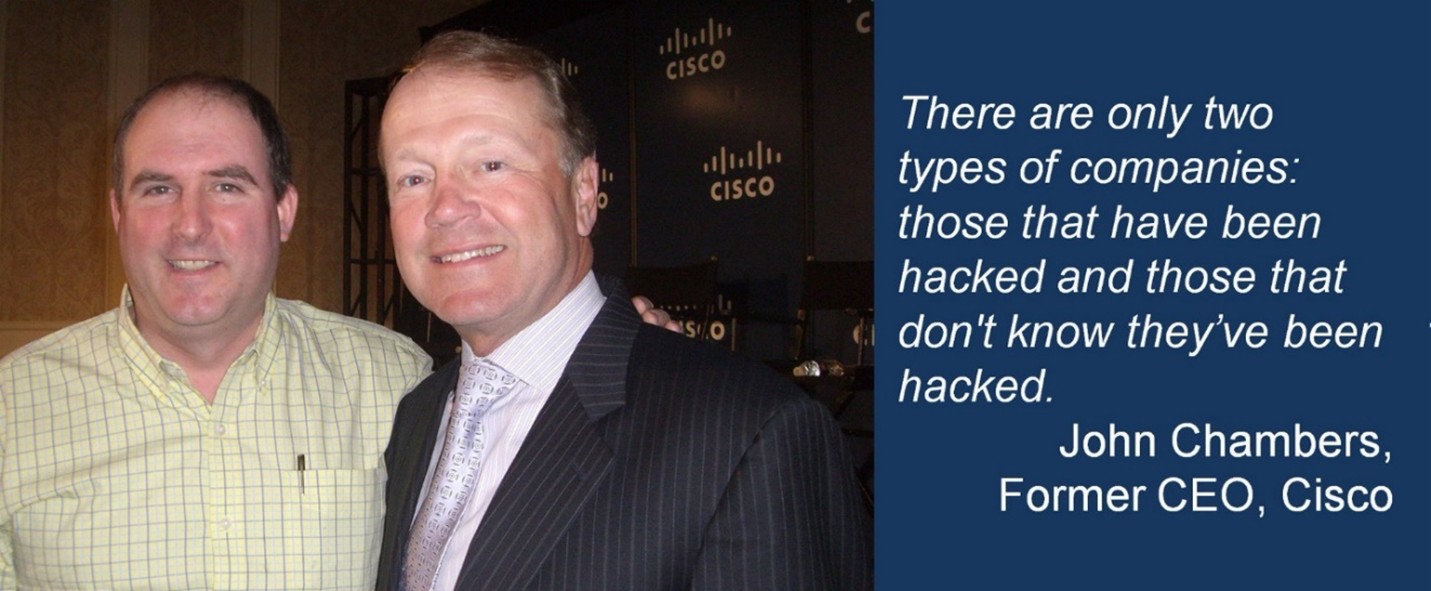
As John Chambers, the former CEO of Cisco, used to say, there are only two types of companies: those that have been hacked and those that don’t know that they’ve been hacked. In other words, this means that companies must be eternally vigilant around cyber security.
The Future of Jobs Report 2025, released at the World Economic Forum in Davos in January 2025 predicted that 39% of the average worker’s skill set will no longer be relevant by 2030. That means that we need an industrial scale focus on learning and development.
Workers need upskilling when, for example, 61% of their current skill set is relevant in the future and 39% is not. Reskilling is when 100% of their current skill set is irrelevant in the future.
That means that we are entering the era of the most rapid change in human history. While technology advances at an exponential rate, people do not.
The question becomes: “How can we use this new technology to facilitate adoption, accelerate learning and protect our organizations?”
We are actually challenged to reinvent work, to reinvent learning and to safely reinvent organizations.
I want to turn my attention to learning in this last part of the chapter because learning, training and development in will become critical to future-proofing our organizations.
Here is what I call a meta method: we can use AI to learn how to use AI.
For example, learning how to use AI has revolutionized education. Personalized, AI-driven tutoring and individualized learning consistently delivers significantly better student outcomes than traditional one-size-fits-all methods.
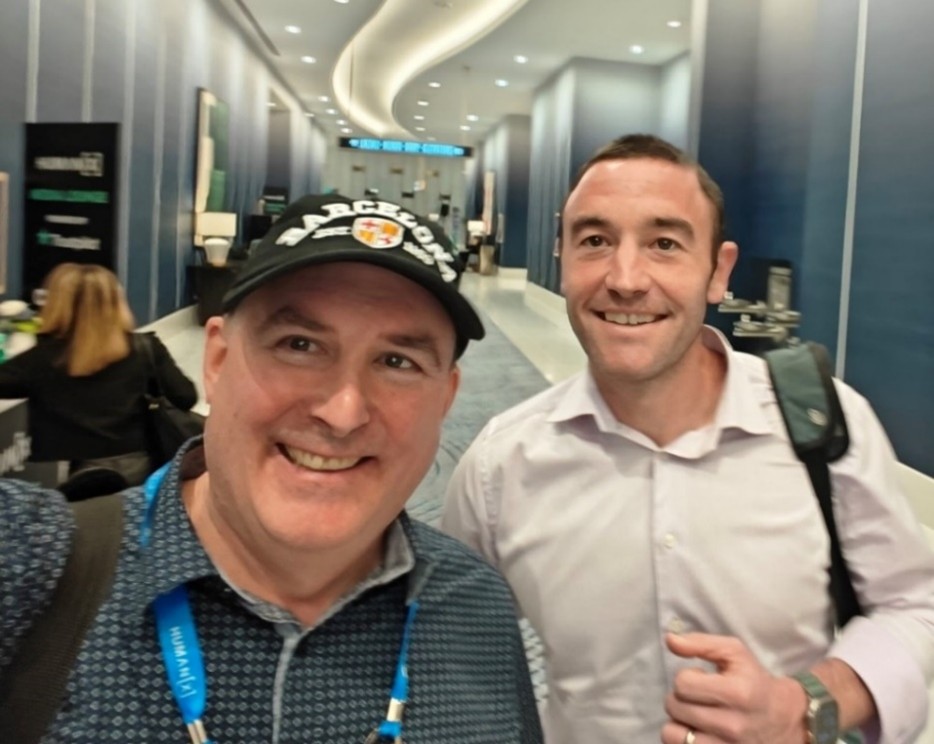
At an AI conference in March 2025, I attended a session with Kevin Weil, Chief Product Officer (CPO) of OpenAI. When asked what excites him most about the future of AI, his answer was clear: personalized tutoring.
Weil cited studies showing that students with a personal tutor will be able to achieve 100 times better learning outcomes than those relying solely on traditional classroom methods. He believes this vision could become reality by 2030.
Weil’s optimism is grounded in the rapidly falling cost of OpenAI’s models—dropping by a factor of ten every year. In 2025, just two years after ChatGPT entered the public spotlight, the models are not only better, but 100 times cheaper. By the end of 2026, they’ll be 1,000 times cheaper than in 2022. This drastic cost reduction is unlocking entirely new applications—ones that were previously financially unfeasible—much sooner than most people realize.
AI is arguably the greatest learning tool in human history. Take Python, the world’s most popular programming language. Traditionally, you’d spend anywhere from $3,000 to $15,000 to learn it through a college course or continuing education program. Or you could open ChatGPT and simply ask: “What is the first thing I need to learn to start learning Python?” ChatGPT will teach you—on demand, at your own pace, in real time—for free. The impact on using AI to better understand cyber-security threats can follow this same path for everyone in an organization.
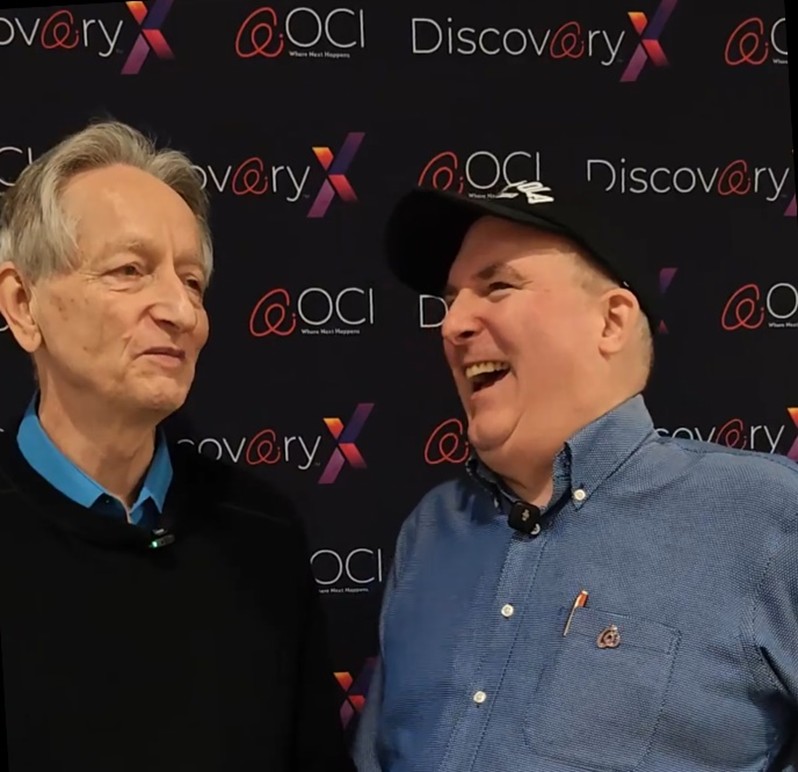
In March 2025, I interviewed Geoffrey Hinton, the 2024 Nobel Laureate often referred to as the "Godfather of AI." I asked him about Weil’s vision of AI improving student outcomes a hundredfold by 2030. Hinton thought Weil was overly optimistic, suggesting instead that we could expect a fourfold improvement. The key difference? Hinton was referring to current results, while Weil was envisioning future potential. Either way, the message is clear: personalized AI tutoring can dramatically improve learning outcomes. That’s why it’s so puzzling that some schools and universities are still banning the use of AI.
The case for AI tutors is compelling. Personalized instruction can adapt to individual learning styles, helping each student learn in the way that works best for them.
Adeel Khan is the founder of Magic School. It’s an AI startup with the mission of make teachers’ lives easier and improve student outcomes by giving educators powerful, safe AI tools. I met him at Web Summit in Vancouver and interviewed him about his startup’s successes.
A teacher in Denver implemented Magic School’s tool for improving writing in his class. The teacher uploaded the rubric for that state-wide exam (a rubric is the way a student’s work is graded). The tool gave student immediate feedback every day on their writing skills, each day focusing on a different part of the rubric. The students had a 28% increase on the statewide testing. It’s important to note that the teacher had no special training, the school board didn’t promote this initiative. So, what could be achieved with a concerted, systematic approach?
Adeel himself used to be a teacher. He had 140 students across fiver periods every day. He pointed out that a single teacher can’t give individualized feedback to every student every day on their writing skills, but an AI can.
“To learn a language, you need to speak it.”
English is a mandatory subject in schools across the globe, but teacher shortages persist. Conversational AI tutors designed for children could provide scalable, affordable support—anytime, anywhere. Cyber Security needs to be addressed in the same way.
Two Techniques: Stacking & Simplifying
One CEO client of mine shared how his son, a university student, is using Otter.ai to transcribe all his lectures. When he encounters something he doesn’t understand, he pastes the transcript into ChatGPT and uses prompts like:
• “Explain this to me as though I’m a seven-year-old.”
• “Now explain it like I’m twelve.”
• “Create a remedial lesson plan with exercises that build from simple to complex to help me understand this concept.”
I call this “stacking”—taking the output from one AI tool (Otter.ai) and feeding it into another (ChatGPT).
Wordly: A New World of Translation
I’ve been a professional speaker for 35 years. At major high-end conferences, real-time translation was once an expensive luxury. It required three to six interpreter booths, a team of translators, radio receivers, and headsets for attendees—easily costing more than $100,000 for a four-day, six-language event.
Today, organizers can use Wordly, an AI-driven platform that takes the conference’s audio feed and translates it into over 120 languages. No receivers needed—attendees use their smartphones and earbuds.
But it gets even better. Wordly also provides real-time transcription. I once sat next to a deaf French woman who was reading the speaker’s words—in French—on her phone as they were being spoken in English on stage.
So instead of offering just six languages, Wordly can offer 120. Instead of costly equipment rentals, everything runs through personal devices. And instead of a $100,000 bill, it can cost as little as $1,500. That’s a 98.5% cost reduction—while also making events dramatically more accessible.
In other words, multinational organizations can drive cyber security awareness and training in multiple languages.
Consider how using AI tutors for cyber security at different levels might work. Individuals can ask AI to look at their individual systems and highlight weaknesses: teams can have AI look at cross-departmental work processes and workflows and identify missing links and fragilities; organizations can use “stacking” different AIs to take an organizational view.
AI is ushering in the greatest revolution learning of every kind has ever seen. Using AI to beat AI will be the new norm, creating “good actors” working for security for our benefit will change the face of security.
1. Invest in mandatory cybersecurity training for every employee.
2. Ensure onsite and offsite automatic backup procedures to protect your data.
3. Implement multi-factor authentication (MFA).
4. Have your training firm run simulated phishing attacks.
5. Hire an outside firm to perform vulnerability testing.
6. Make sure your IT team regularly updates the software with security patches.
7. Gamify it: reward employees who pass the test with a free firm-branded coffee mug.
8. Have different employees lead the training every quarter. The best way to learn something is to teach it. Stephen Covey, who wrote The Seven Habits of Highly Successful People, used to always promote learners becoming teachers.
9. Get cybersecurity insurance in your company. Our insurance firm gave us lower rates once they conducted penetration testing and cyber readiness testing for our systems.
10. Include cybersecurity training as a mandatory part of onboarding before granting new employees access to IT systems.
About the Author
Jim Harris is a one of North America’s foremost thinkers on AI, and disruptive innovation, and cyber security. He is one of the world’s leading keynote speakers presenting internationally at more than 50 in-person and virtual conferences and events a year. Association magazine ranked him as one of North America’s top ten speakers. Jim also leads strategic planning sessions with executive teams.
Jim was named the Speaker of the Year in 2024 by the largest CEO peer mentoring organization in Canada. He was selected from among the 500 speakers the organization works with.
His YouTube video The AI Revolution with Jim Harris 2025 at video https://www.youtube.com/watch?v=zmyTJVWyQJI has broken 3+ million views.
Jim has led a strategic planning exercise for the CIOs and CTOs of Canada’s largest hyper-scalers (Amazon, Google and Microsoft) and leading IT firms in the security space like Palo Alto Networks for the Canadian Forum for Digital Infrastructure Resilience (CFDIR) for Innovation, Science and Economic Development (ISED) for the Government of Canada at the Canadian Centre for Cyber Security. He has also worked with CSIS (but don’t tell anyone).
Jim has published five books. Blindsided! was released in 80 countries and is a #1 International bestseller. His second book The Learning Paradox was nominated for the national business book award in Canada. And his first book in 1990 was a national bestseller. His clients include many health care authorities, health care professionals, pharmaceutical firms along with American Express, Barclays Bank, IBM, Munich Re, the Top 200 CIOs of India, the UK Cabinet Office, SAP, Swiss Re, Walmart, Zurich Insurance. Between 1990 and 1996 Jim represented Dr Stephen Covey teaching the 7 Habits of Highly Effective People.
© copyright 2025 by Jim Harris. All rights reserved. This article and book chapter cannot be republished without the written permission of the author. Jim Harris is an AI futurist, international bestselling author on disruptive innovation and keynote speaker. You can reach him at https://www.linkedin.com/in/jimharrisprofile/ or email him at jim@jimharris.com
A STAGGERING 94% OF CAR ACCIDENTS ARE DUE TO DRIVER ERROR. So think about the 40,000 lives that will be saved in North America every year in 2025 when all new cars are autonomous (self-driving) vehicles. Think of the 2.5 million people who won’t be maimed or seriously injured annually. Think of the emotional trauma that families will be spared. That’s the GREAT news. There’s also $190 billion of savings in health care costs, the value of lost wages and government benefits. (Globally 1.3 million lives will be saved every year and up to 50 million people will be spared serious injuries).
Continue reading#1 International Best Selling Author, Management Consultant, Keynote Speaker, and Strategic Planning Facilitator
Boost the bottom line of your business with expert advice from CURRENT Organization, a professional innovation consultant based business in Toronto, Ontario.

662 Eglinton Ave East, Toronto, Ontario, Canada M4G 2K4
.png)
jim@jimharris.com
.png)
Jim: (416) 388-3432
Shawnessy: (416) 696-5225
.png)

.png)